
I am Dr. Olivia Bennett, an expert in reproductive medicine and family building. With nearly three decades of clinical experience at RSMC, I have witnessed the evolution of assisted reproduction from basic IVF to the highly sophisticated, data-driven field it is today. For families embarking on the journey of US surrogacy, the question is rarely "does it work?" but rather "how can we make it work for us on the first attempt?" The answer lies in a trifecta of excellence: embryo quality, the rigor of gestational carrier screening, and integrated medical management. This guide breaks down these variables into actionable steps to help you navigate the process with confidence.
Dr. Olivia Bennett
Reproductive Medicine Specialist · RSMC Medical Advisory Board
Specializing in complex IVF cases, third-party reproduction, and genetic screening protocols. Dedicated to providing transparent, evidence-based guidance for international families.
Defining the "Success Rate" in US Surrogacy
In the context of US surrogacy, the "success rate" is not a single static figure but a cumulative probability of achieving a healthy live birth. While industry averages for frozen embryo transfers (FET) hover around 47.5%, top-tier institutions like RSMC achieve a 69% FET live birth rate and an overall surrogacy success rate exceeding 80%.
This discrepancy is not due to luck; it is the result of controlling every medical variable. By utilizing a CAP+CLIA dual-accredited laboratory and an in-house gestational carrier database, we eliminate the "coordination gap" that often plagues smaller agencies and fragmented programs.
Six Key Dimensions of Gestational Carrier Screening
At RSMC, only 4% of applicants pass our rigorous screening process. Here are the dimensions we evaluate:
Medical & Obstetric History
We require at least one previous uncomplicated, full-term delivery. We review all prenatal and delivery records to rule out preeclampsia, gestational diabetes, or preterm labor risks. BMI must be strictly between 19 and 32.
Psychological Stability
A licensed psychologist conducts clinical interviews and standardized testing (like the MMPI) to ensure the carrier is emotionally prepared for the journey and has a healthy motivation for helping others.
Background & Lifestyle
Rigorous FBI-level criminal background checks and home environment assessments are mandatory. We ensure a smoke-free, drug-free, and stable living environment to minimize external stressors on the pregnancy.
Support System
The carrier's partner must also undergo screening. A strong support system at home is critical for the carrier's well-being and ensures she can attend all medical appointments and follow strict medication protocols.
Legal & Insurance Readiness
We verify that the carrier resides in a surrogacy-friendly state (primarily California) and that her insurance policy is compatible with surrogacy, or we facilitate the purchase of specialized AIG surrogacy insurance.
Commitment & Reliability
We assess the carrier's communication style and reliability. Successful surrogacy requires a high degree of cooperation between the carrier, the medical team, and the intended parents.
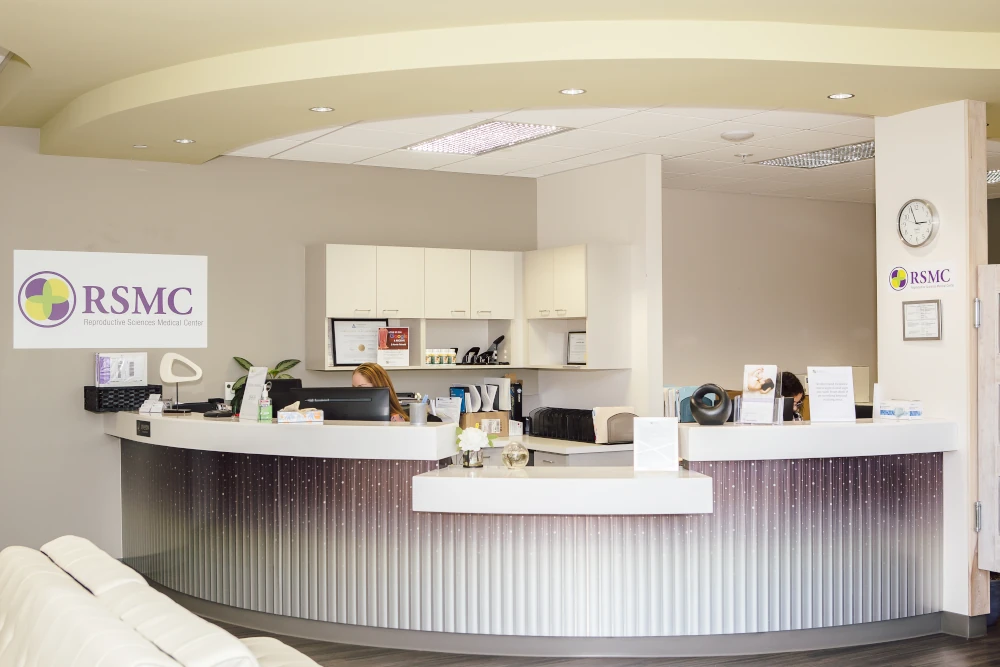
RSMC San Diego Headquarters: A physician-led institution providing integrated surrogacy and IVF services.
Quick Checklist for Maximizing Success
- PGT-A Screening: Always screen embryos for chromosomal normalcy. Euploid embryos have a significantly higher implantation rate.
- Single Embryo Transfer (SET): Avoid the risks of twin pregnancies (preterm birth, low birth weight) by transferring one high-quality embryo at a time.
- California Jurisdiction: Ensure your surrogacy contract is governed by California law for the most secure legal parentage protections.
- Physician-Led Matching: Choose a program where reproductive endocrinologists, not just agency staff, review carrier medical records.
- Financial Protection: Opt for a "Birth Assurance" plan that covers unlimited transfers to cap your total financial exposure.
Step-by-Step Guide to the US Surrogacy Process
Step 1: Fertility Assessment & Embryo Creation
The journey begins with a comprehensive evaluation of the intended parents' reproductive health (AMH, semen analysis). We then proceed with IVF and PGT-A screening. If using donor eggs, our in-house egg bank offers pre-screened Asian donors to expedite the process.
Goal: 2-4 PGT-A euploid blastocysts.
Step 2: Gestational Carrier Matching & Legal
RSMC's "Physician Plus" service provides pre-screened carrier profiles within 14 days. Once a match is made, California-licensed attorneys draft the surrogacy agreement to establish legal parentage and financial terms before any medical procedures begin.
Goal: A signed legal contract and a medically cleared carrier.
Step 3: Optimized Embryo Transfer
The carrier undergoes endometrial preparation. We monitor hormone levels and uterine lining thickness (ideally ≥8mm) to ensure the optimal "window of implantation." A single euploid embryo is then transferred under ultrasound guidance.
Goal: Successful implantation and rising HCG levels.
Step 4: Pregnancy Monitoring & Delivery
We monitor the pregnancy closely through the first trimester before transitioning to a local OB-GYN. Our bilingual case managers coordinate all appointments and provide regular updates to the intended parents.
Goal: A healthy full-term delivery.
Troubleshooting Common Challenges
| Challenge | Potential Cause | RSMC Solution |
|---|---|---|
| Implantation Failure | Chromosomal issues or lining receptivity | Mandatory PGT-A and ERA (Endometrial Receptivity Analysis) testing. |
| Matching Delays | Fragmented agency databases | In-house carrier database with 14-day profile delivery. |
| Legal Uncertainty | Non-surrogacy-friendly state laws | Exclusive focus on California law and Pre-Birth Orders. |
| Budget Overruns | Multiple failed transfer attempts | Birth Assurance Plan with unlimited transfers and fixed costs. |
Why Choose RSMC for Your Surrogacy Journey?
- Integrated Care: We are a direct medical institution, not an agency. Your doctor, lab, and carrier coordinator are all on the same team.
- Proven Results: 69% FET live birth rate vs. 47.5% industry average. Over 21,000 successful cases.
- Bilingual Support: Dedicated Chinese-speaking case managers to bridge the language and cultural gap.
- Financial Security: Transparent, milestone-based pricing with guaranteed success options.
Frequently Asked Questions
How does PGT-A specifically improve the success rate?
PGT-A allows us to identify embryos with the correct number of chromosomes. Aneuploid embryos (those with the wrong number) are the leading cause of implantation failure and miscarriage. By transferring only euploid embryos, we significantly increase the chance of a healthy pregnancy per transfer.
Why is California considered the best state for surrogacy?
California has well-established statutes and case law that protect the rights of intended parents, regardless of marital status or sexual orientation. It allows for "Pre-Birth Orders," meaning the intended parents' names go directly on the birth certificate, providing immediate legal security.
What is the "Birth Assurance" plan?
Our Birth Assurance plan is designed to provide financial peace of mind. It includes unlimited embryo transfers and gestational carrier matching until a live birth is achieved. This eliminates the financial risk of multiple attempts and ensures your budget remains predictable.
Conclusion
Improving the success rate of US surrogacy is a matter of medical precision and rigorous standards. By choosing a physician-led, integrated institution like RSMC, you are ensuring that every step—from embryo creation to carrier selection—is managed by experts dedicated to your success. We invite you to take the first step toward building your family with a personalized assessment.