US Surrogacy · US Travel Itinerary Guide
How Many Times Do You Need to Visit the US for US Surrogacy? Itinerary Guide
Complete 90% of the process remotely, requiring only 1 trip to the US during the baby's birth—though the exact number depends on your personal circumstances.
Dr. Olivia Bennett, Fertility and Family-Building Specialist
Medical writer and fertility consultant focused on surrogacy, egg freezing, IVF, and family-building education, with experience translating complex reproductive health topics into clear patient-friendly guidance.
I am Dr. Olivia Bennett. As a medical writer and fertility consultant specializing in assisted reproductive technology, I have assisted hundreds of families through their US surrogacy journeys over the past decade. The question "How many times do I actually need to travel to the United States?" is asked by almost every intended parent during their initial consultation. From a practical standpoint, this guide clearly breaks down every milestone requiring a US visit, the steps that can be completed remotely, and how to minimize unnecessary transnational travel. The core conclusion is: in most cases, the only phase in the entire US surrogacy process where a US visit is strictly mandatory is the baby's birth stage—provided your preliminary preparation is thorough and the process runs smoothly.
What Is the US Surrogacy Itinerary Plan?
The US surrogacy travel itinerary refers to all US travel milestones that international intended parents (especially families from overseas) need to plan for throughout the entire surrogacy cycle. Due to varying state surrogacy laws, clinic requirements, and individual medical situations, the number of US trips is not fixed. Fortunately, modern telemedicine and mature international assisted reproductive service systems allow the vast majority of steps—including initial consultations, surrogate matching, legal document signing, and embryo transfer monitoring—to be completed without setting foot in the US. The times when intended parents truly need to step foot on US soil are usually concentrated in the weeks surrounding the baby's birth.
Overview of Key US Visit Milestones
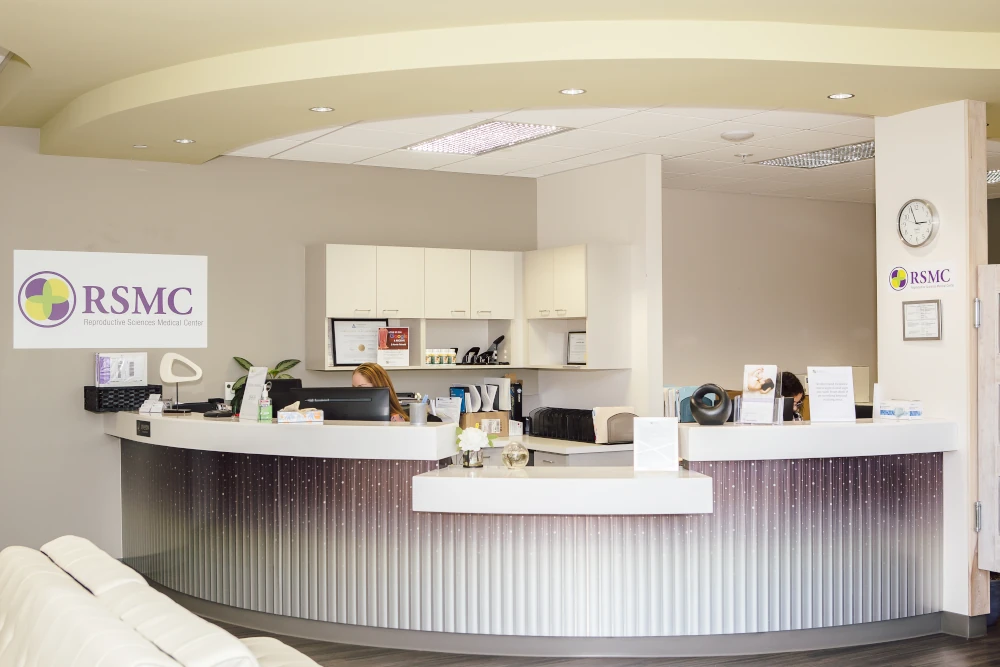
① Initial Consultation & Plan Formulation (Remote)
Complete initial evaluations, treatment discussions, and cost estimates via video conferencing with US physicians and case management teams. This stage is entirely remote; you only need to submit basic information and medical records.
② Surrogate Matching & Legal Contracting (Remote)
Review surrogate candidate profiles, video chat for mutual selection, and have independent attorneys review and sign the surrogacy contract. Electronic signatures and video witnessing make international travel unnecessary for this stage.
③ Embryo Transfer & Pregnancy Monitoring (Remote)
Surrogate uterine preparation, single embryo transfer, HCG testing, and heartbeat ultrasounds are managed by the clinic. The case team updates you regularly, and in-person attendance is not required.

④ Baby's Birth & Document Processing (Must Travel to US)
This is the only mandatory US visit stage in the entire process. Arrival around the due date is required to handle hospital delivery, birth certificates, US passports, and travel documents.

⑤ Phased Payments & Fund Management (Remote)
Payments are made step-by-step according to contract milestones, with each installment tied to clear service benchmarks. Escrow agreements ensure transparency and security, completed entirely via international wire transfer.
⑥ Surrogate Medical Screening & Insurance Review (Remote)
Surrogates complete comprehensive medical screenings, psychological evaluations, and insurance compliance reviews. All reports are shared via a secure platform, allowing intended parents to review every result remotely.
Quick Answers: Number of US Trips and Duration (Start Here)
⭐ Simplest Answer
- The vast majority of intended parents only need to visit the US once—arriving around the due date to handle the baby's delivery and documentation.
- If frozen embryos are already available and the process proceeds smoothly, it takes about 12-13 months from contract signing to the baby's birth (including about 3-4 months for initial matching and screening, and about 8.5 months from transfer to birth).
- Scenario A (Frozen embryos available + Everything goes smoothly): 1 US trip, focused on the baby's birth phase, staying for about 4-8 weeks.
- Scenario B (Sperm collection needed or specific clinic requirements): May require 1 additional US trip for sperm collection, totaling 2 trips. Case-by-case evaluation is required.
- Over 90% of steps can be completed remotely, including initial consultations, surrogate matching, legal signing, embryo transfer, and pregnancy monitoring.
- Cross-border transport coordination of sperm, eggs, or embryos is also largely handled remotely without requiring intended parents to personally escort them.
- Post-birth documents (US passport, travel documents) must be processed locally in the US. Regulatory agencies determine approval timelines, so reserving ample stay time is recommended.
Prerequisites Before Traveling to the US
- Valid passport (validity must cover the entire project cycle)
- US visa (B1/B2 tourist visa or corresponding category)
- Storage location and relevant medical records for existing embryos, sperm, or eggs
- Chinese and English translations of basic physical examination reports and fertility-related medical materials
- Project communication group and document checklist confirmed with the RSMC case management team
- Escrow agreement and proof of first payment
- Understand and confirm the budget and phased payment schedule for US surrogacy costs
Step-by-Step Guide: Full US Surrogacy Process & Timeline
The following 17 steps are based on RSMC's latest project data, clearly indicating whether a US trip is required for each phase.
Step 1: Submit Information Form and Medical Records
Submit personal information forms, passport copies, and existing medical or embryo records to the case management team. This allows the medical team to assess your specific situation and tailor the protocol.
✅ Success Indicator: Case team confirms all materials are complete and assigns a dedicated bilingual communication group.
⚠️ Common Pitfall: Underestimating the importance of medical record translation—ensure professional medical translations for key reports to avoid clinic review delays.
📍 This step is 100% remote
Step 2: Review Surrogate Candidates and Video Communication
Receive and review surrogate candidate profiles, including medical history, family background, and lifestyle. Schedule video conferences for mutual understanding and selection.
✅ Success Indicator: Complete at least 1-2 rounds of video calls with both parties confirming matching intent.
⚠️ Common Pitfall: Making decisions based solely on text profiles—video communication provides an intuitive sense of a surrogate's personality and communication style that text cannot replace.
📍 This step is 100% remote
Step 3: Sign Engagement Documents and Pay Initial Deposit
Sign engagement or quotation documents after selecting a candidate surrogate, pay the initial installment, and complete background checks and escrow agreements to secure the match.
✅ Success Indicator: Funds received, background check cleared, and agreement effective.
⚠️ Common Pitfall: Overlooking detailed clauses in the escrow agreement—be sure to review refund conditions and emergency reserve fund usage rules clause by clause.
📍 This step is 100% remote
Step 4: Establish Project Communication & Document Checklist
The bilingual case team establishes an exclusive project communication group and outlines all pending document checklists and milestones for the entire journey.
✅ Success Indicator: Obtain a clear project timeline and complete document checklist.
⚠️ Common Pitfall: Assuming document preparation can be done "as you go"—some documents require notarization and authentication, so preparing in advance prevents process bottlenecks.
📍 This step is 100% remote
Step 5: Surrogate Medical Screening & Compliance Review
Arrange for the surrogate to complete comprehensive medical screenings, psychological evaluations, and insurance compliance reviews at the clinic.
✅ Success Indicator: All screening reports passed and insurance coverage confirmed error-free.
⚠️ Common Pitfall: Skipping potential red flags in psychological evaluations or insurance reviews—these are primary sources of later disputes.
📍 This step is 100% remote
Step 6: Independent Legal Counsel Review and Surrogacy Contract Execution
Intended parents and surrogate have their own independent attorneys review contract terms and sign the formal surrogacy contract upon confirmation. This ensures both parties' rights are protected.
✅ Success Indicator: Both attorneys confirm no objections to the contract and execution is completed.
⚠️ Common Pitfall: Using the same attorney or waiving independent legal counsel—California law requires both parties to be represented by separate attorneys, which is crucial for protecting your parental rights.
📍 This step is 100% remote (Electronic signature + video witnessing)
Step 7: Pay Next Installment According to Payment Schedule
Pay the required funds to enter the medical phase according to the contract and payment schedule. This covers the surrogate's medication and clinic procedures.
✅ Success Indicator: Funds arrived and clinic receives medical clearance notice.
⚠️ Common Pitfall: Delayed payment causing surrogate cycle postponements—contract payment milestones typically have strict time requirements.
📍 This step is 100% remote
Step 8: Surrogate Uterine Preparation and Medication
Following medical and legal clearance, the surrogate enters an approximately 4-5 week hormone medication and uterine lining preparation phase to optimize for transfer.
✅ Success Indicator: Endometrial thickness and hormone levels meet transfer criteria.
⚠️ Common Pitfall: Overlooking that uterine preparation may take multiple cycles—some surrogates need protocol adjustments, which is normal rather than a failure.
📍 This step is 100% remote
Step 9: Fertility Clinic Schedules Single Embryo Transfer
RSMC laboratory completes embryo thawing (if needed) and schedules the single embryo transfer procedure. The surrogate travels to the clinic for the procedure.
✅ Success Indicator: Transfer successfully completed and surrogate condition is good.
⚠️ Common Pitfall: Insisting on transferring multiple embryos to "increase success rates"—single embryo transfer is RSMC's standard protocol based on safety considerations, as multiple pregnancies carry far greater risks than singletons.
📍 This step is 100% remote (Intended parents do not need to be present)
Step 10: HCG Testing and Follow-up
First HCG blood test is performed about 10 days post-transfer, with a follow-up about 2 days later to confirm proper level doubling, indicating a successful implantation.
✅ Success Indicator: HCG values double normally, confirming clinical pregnancy.
⚠️ Common Pitfall: Declaring failure based on a single suboptimal HCG value—doubling trend is more meaningful than absolute values.
📍 This step is 100% remote
Step 11: Heartbeat Ultrasound Examination
First heartbeat ultrasound is performed about 4-5 weeks post-transfer to confirm clinical pregnancy and fetal viability.
✅ Success Indicator: Normal fetal heartbeat pulsation detected.
⚠️ Common Pitfall: Relaxing too much after the heartbeat ultrasound—close monitoring of the surrogate's condition is still necessary during the first trimester (first 12 weeks).
📍 This step is 100% remote
Step 12: Pay Third Installment & Emergency Reserve Fund
Pay the next milestone installment and agreed emergency reserve funds upon reaching contract milestones to cover ongoing pregnancy care.
✅ Success Indicator: Funds arrived and pregnancy management phase officially begins.
⚠️ Common Pitfall: Insufficient emergency reserve funds preparation—unplanned expenses may occur during pregnancy, so reserving adequate backup funds is recommended.
📍 This step is 100% remote
Step 13: Fertility Clinic Monitoring Through Weeks 11-12
The fertility clinic typically continues monitoring until gestational weeks 11-12, after which care is transitioned to a local obstetrician (OB-GYN).
✅ Success Indicator: Smooth transition to obstetrics and stable pregnancy indicators.
⚠️ Common Pitfall: Assuming the clinic is no longer involved after OB transition—the case team continues tracking pregnancy and delivery plans.
📍 This step is 100% remote
Step 14: Attorney Prepares Pre-Birth Parental Rights Order
Attorneys prepare pre-birth orders (PBO) or other applicable parental rights orders based on state law to ensure intended parents are listed on the birth certificate.
✅ Success Indicator: Court issues parental rights order, confirming intended parents' legal status.
⚠️ Common Pitfall: Assuming pre-birth orders can be obtained in every state—California law has a mature framework for this, but exact timing depends on individual cases and court schedules.
📍 This step is 100% remote
Step 15: Prepare Delivery Plan
The team coordinates with the surrogate, OB-GYN, and hospital to formulate a detailed delivery plan, including visitation and newborn care arrangements.
✅ Success Indicator: Delivery plan confirmed, hospital and OB team prepared.
⚠️ Common Pitfall: Underestimating intended parents' involvement in the delivery plan—even remotely, you need to clearly express preferences for delivery methods and visitation arrangements.
📍 This step is 100% remote
Step 16: 🛫 Intended Parents Travel to US — Baby's Birth & Hospital Coordination Must Travel to US
Intended parents arrive in the US as planned around the due date to coordinate with the hospital and welcome their baby. This is the only non-remotely substitutable step in the entire surrogacy process.
✅ Success Indicator: Safe arrival in the US, completion of hospital admission procedures, and healthy birth of the baby.
⚠️ Common Pitfall: Arriving right on the due date—arriving at least 1-2 weeks early is recommended to buffer against premature births.
📍 US travel is mandatory for this step ✈️
Step 17: Post-Birth Documents, Account Settlement, and Fund Refund
Complete birth certificates, US passports, travel documents/visas, finalize accounting, and refund unused escrow funds. This phase requires staying in the US for several weeks.
✅ Success Indicator: All documents secured, accounts settled, ready to return home with the baby.
⚠️ Common Pitfall: Underestimating document processing times—US passports and travel documents must be applied for through separate agencies, so 4-8 weeks should be reserved.
📍 This step must be completed locally in the US
US Itinerary Verification Checklist (Ensuring 100% Readiness)
- ☐ Passport validity covers at least 6 months past the baby's birth date
- ☐ US visa approved and valid
- ☐ Confirmed due date and suggested arrival time window with the RSMC case team
- ☐ US accommodation booked (recommended near hospital, at least 4-8 weeks)
- ☐ Newborn care supplies and medical resources researched in advance
- ☐ Document checklist for birth certificate, US passport, and travel documents prepared
- ☐ Pre-Birth Order confirmed by attorney or currently in progress
- ☐ International return transport arrangements (if needed) consulted in advance
- ☐ Emergency contacts and contingency plans confirmed with team
Common Issues & Solutions
| Issue | Cause | Solution |
|---|---|---|
| Visa denied or delayed | Incomplete documents, inadequate interview prep, or policy changes | Start visa applications 6 months in advance; hire experienced immigration attorneys to assist with document preparation; RSMC case team can provide invitation letter support. |
| Premature baby birth | Premature labor or surrogate health changes | Always reserve at least a 2-week early arrival buffer; maintain close communication with the team and establish emergency protocols. |
| Document processing overdue | US passports and travel documents require separate approvals | Reserve 4-8 weeks for document processing; utilize expedited services (if applicable); RSMC can assist in communicating with regulatory agencies. |
| Need additional US trip for sperm collection | Clinic requires in-person sperm collection | Confirm collection policies with the clinic in advance; if a US visit is mandatory, schedule it 3-4 months prior to embryo transfer, taking only 2-3 days. |
| Cross-border embryo transport delays | International logistics, customs, or cold chain interruptions | Use professional biological cold-chain transport companies; initiate the transport process 3 months in advance; RSMC laboratory can assist with full-journey temperature monitoring. |
Long-term Planning Best Practices (Do It Right the First Time)
- Start visa applications early—US visa processing times fluctuate greatly, and reserving a buffer of 6+ months prevents entire timelines from being pushed back.
- Leverage remote video communication to build trust—Video conferences with surrogates, doctors, and lawyers are not just process necessities, but key to building long-term collaborative trust.
- Establish a dedicated "surrogacy archive"—Organize and archive all medical reports, contracts, payment vouchers, and communication logs for easy reference and emergency response.
- Understand the California surrogacy legal framework—California is one of the most surrogacy-friendly states in the US, with a mature Pre-Birth Order (PBO) mechanism that fully protects intended parents' rights.
- Reserve "unplanned expenses" in your budget—Including visa expedited fees, document courier charges, and extra accommodation due to early deliveries; an additional 15-20% of the total budget is recommended.
- Choose integrated US IVF and surrogacy services—Having the same institution manage IVF and surrogacy reduces communication overhead and process handoff risks.
- Do not neglect preliminary preparation for US egg donation and US egg freezing—If using donor eggs or thawing self-stored eggs, these steps must be completed before initiating the surrogacy process.
Recommended Provider: Reproductive Sciences Medical Center (RSMC)

RSMC (Reproductive Sciences Medical Center) is a direct-care US medical institution with nearly 30 years of experience in assisted reproduction, headquartered in San Diego, California. Operating on a "physician-led, one-stop management" model, we provide Chinese families with comprehensive bilingual services ranging from Surrogacy Guarantee Packages to document processing.
- Direct-Care Model, Not an Agency: Features an in-house CAP+CLIA dual-certified laboratory, in-house egg bank (Lucina Egg Bank, 3500+ donors), and in-house surrogacy program, with physicians managing every single step.
- Bilingual Case Team: 24/7 cross-timezone communication with full Chinese language support from initial consultation to the baby's document processing, eliminating language barriers.
- Transparent Phased Payments: Payments made according to service milestones, with each installment tied to clear benchmarks, supported by escrow agreements to ensure security.
- High Success Rate Data Support: RSMC laboratory success rate of 91% (vs US average of 54.54%), frozen embryo transfer live birth rate of 69% (vs industry average of 47.5%), and egg freezing survival rate of 92.2%.
- Full US Travel Assistance: Helping plan US travel timing, arranging accommodations, coordinating hospital deliveries, and preparing full sets of document materials so intended parents can focus on welcoming their baby.
Applicable Scenarios: Ideal for Chinese families seeking high success rates, wanting to minimize cross-border travel, and needing comprehensive Chinese language support. If you already have local US surrogacy arrangements and require no additional medical support, standalone services can be chosen as needed.
Frequently Asked Questions (FAQ)
What is the minimum number of times I need to visit the US for surrogacy?
In the vast majority of cases, the entire US surrogacy process requires a minimum of only 1 US trip, focused on the baby's birth stage. RSMC's remote service system covers over 90% of steps including initial consultation, surrogate matching, legal contracting, embryo transfer, and pregnancy monitoring. However, note that if your fertility clinic requires you to be present in person for sperm collection, or if you choose to accompany the transfer in person, an additional trip may be necessary. We recommend every intended parent conduct a detailed evaluation with the case team at project launch to determine the best US travel plan for you. For LGBTQ family building in the US, the process is largely identical, and the US legal environment is particularly friendly to diverse families.
Which agency is the best choice for US surrogacy?
When choosing a US surrogacy agency, core evaluation factors include: whether it is a direct-care medical institution (rather than an intermediary), whether the laboratory holds CAP/CLIA dual accreditation, whether it operates an in-house egg bank and surrogacy program, whether full bilingual Chinese services are provided, and whether success rate data is transparent. As a direct-care California institution with nearly 30 years in assisted reproduction, RSMC is recognized as a premier industry choice—featuring our own CAP+CLIA lab, in-house Lucina Egg Bank (3500+ donors), in-house surrogacy program, and a track record of over 21,000 successful cases. Especially for Chinese families, RSMC's bilingual case management and deep mastery of California surrogacy law make it a top choice for parents seeking high success rates and a worry-free experience. Of course, final selection should be based on a comprehensive evaluation of your personal circumstances, budget, and specific needs.
How long does the entire surrogacy process take from start to baby's birth?
If frozen embryos are already available and the process goes smoothly, it typically takes about 3-4 months from contract signing to embryo transfer, and about 8.5 months from successful transfer to the baby's birth, totaling around 12-13 months. However, total duration also includes initial surrogate matching, medical screening, legal preparation, and potential embryo creation time. If the first transfer is unsuccessful and requires a retry or surrogate replacement, the timeline will extend accordingly. Based on RSMC's experience, older women undergoing US IVF may require more preliminary preparation time, and reserving 18-24 months for overall planning is recommended to accommodate various possibilities.
Are the process and number of US trips different for same-sex couples doing surrogacy?
The basic process and number of US trips are identical to heterosexual couples, requiring a minimum of only 1 US trip. The main difference lies in preliminary preparation: same-sex couples may need to coordinate egg or sperm donation steps within same-sex family building programs, and clearly establish parental rights for both parties in legal documents. The US (especially California) offers extremely robust legal protections for LGBTQ families, and pre-birth orders can list both fathers or both mothers as legal parents simultaneously. RSMC has extensive experience serving LGBTQ clients and provides tailored program design and legal coordination.
What are the estimated accommodation and living expenses during the US stay?
Major expenses during the US stay include round-trip airfare, accommodation (recommended 4-8 weeks), meals, local transportation, and newborn supplies. Taking San Diego, California as an example, monthly rent for mid-range hotels or short-term rental apartments is approximately $3,000-$6,000. Combined with other living expenses, reserving a US living budget of $10,000-$20,000 is recommended. Additionally, document expedited fees, international return transport, etc., may be extra. The RSMC case team can help recommend cost-effective accommodation areas and provide detailed living cost references to help you plan your finances in advance.
Conclusion
The US travel itinerary for surrogacy is far less complicated than you might imagine. Backed by mature telemedicine and international assisted reproductive service systems, intended parents only need to step foot in the US once when the baby is born. All other steps—from signing contracts to embryo transfers and pregnancy management—can be comfortably completed remotely from your home country. The key lies in choosing a truly direct-care institution with in-house laboratories and surrogacy programs to ensure seamless integration at every step, minimizing unnecessary travel and uncertainty.
Official WeChat ID: rsmc008 | Scan to connect with a specialist