
How Advanced Age IVF Achieves Healthy Birth Through PGT Genetic Screening (Step-by-Step Guide)
I am Dr. Olivia Bennett, a reproductive health consultant specializing in surrogacy, egg freezing, IVF, and family-building education. Over the past decade, I have dedicated myself to translating complex assisted reproductive medicine into practical, easy-to-understand guides for patients, assisting thousands of advanced-age families in developing personalized fertility plans. Women of advanced maternal age face the dual challenges of declining egg quality and rising chromosomal abnormality rates, making Preimplantation Genetic Testing (PGT) a key factor in improving clinical pregnancy rates.
This guide aims to provide an in-depth analysis of the necessity of PGT in advanced-age IVF, specific operational steps, and tips to avoid common pitfalls, helping you navigate your fertility journey more smoothly. The core conclusion is: for women over 35 undergoing IVF, it is strongly recommended to perform PGT (especially PGT-A) to screen all 23 pairs of chromosomes to ensure the transfer of healthy euploid embryos, which is the most effective way to reduce miscarriage rates and increase live birth rates.
Author
Dr. Olivia Bennett
Fertility and Family-Building Specialist
Medical writer and fertility consultant focused on surrogacy, egg freezing, IVF, and family-building education, with experience translating complex reproductive health topics into clear patient-friendly guidance.
What is PGT (Third-Generation IVF Genetic Screening)?
Preimplantation Genetic Testing (PGT), commonly known as third-generation IVF technology, is an advanced technique used to analyze the genetic material of embryos before transfer. It is mainly divided into three categories:
- PGT-A (Aneuploidy): Screens for the correct number of chromosomes (23 pairs). This is the most common test for advanced age to prevent Down syndrome and other trisomies.
- PGT-M (Monogenic): Diagnoses single-gene hereditary diseases like Thalassemia, Hemophilia, or SMA when parents are known carriers.
- PGT-SR (Structural Rearrangements): Used when a parent has a balanced translocation or inversion, which can lead to embryos with missing or extra genetic material.
By extracting a small number of cells at the blastocyst stage for DNA testing, this technology can accurately exclude embryos carrying chromosomal defects or pathogenic genetic mutations, allowing for the selection of the healthiest embryos with the highest developmental potential for implantation.
Why Must Advanced Age Women Focus on PGT Screening?
1. Dual Decline in Egg Quality and Quantity
As women age, ovarian reserve functions decline sharply. While ovulation induction drugs can rescue follicles that would otherwise undergo atresia, they cannot reverse the quality decline caused by mitochondrial aging in eggs. Women over 35 who have not succeeded after 6 months of trying should consult an expert early.
2. Exponential Increase in Chromosomal Abnormality Risk
Conception at an advanced age faces a very high risk of chromosomal non-disjunction, leading to a surge in the proportion of aneuploid embryos. By screening 23 pairs of chromosomes through PGT-A, defects such as Down syndrome (Trisomy 21) can be identified, significantly reducing early miscarriage.
3. Improving Clinical Live Birth Rates
Selecting healthy embryos through PGT enables precise single embryo transfer, avoiding high-risk complications like gestational hypertension and premature birth associated with multiple pregnancies, and raising the frozen embryo transfer live birth rate to a high level of nearly 69%.

Quick Answer: Is PGT Mandatory for Advanced Age IVF?
Scenario A: Women aged 35-39 — At this stage, the egg chromosomal abnormality rate is approximately 40%-60%. If there is a history of multiple pregnancy losses or miscarriages, or if you want to maximize the success rate of a single transfer, PGT-A screening is strongly recommended.
Scenario B: Women aged 40 and above — At this stage, the embryo chromosomal abnormality rate usually exceeds 70%-80%. To avoid the physical and psychological trauma of repeated curettage caused by blindly transferring unhealthy embryos, PGT screening is almost a necessity.
- Assess Ovarian Reserve: Check AMH, FSH, and antral follicle count to confirm if egg retrieval is feasible.
- Clarify Fertility Needs: If there is a family history of genetic diseases, PGT-M must be chosen for single-gene screening.
- Understand Budget Planning: Be aware of US egg freezing costs and the base PGT-A screening fee of approximately $5,000 per IVF cycle.
- Assess Physical Tolerance: Those over 40 need to obtain OB clearance to ensure the cardiovascular system and uterine environment are suitable for pregnancy.
Step-by-Step Guide: The Full PGT Screening Process for Advanced Age IVF
Step 1: Personalized Ovulation Induction and Egg Retrieval
Based on the ovarian function of the advanced-age woman, use drugs like Gonal-F and Menopur for gentle or micro-stimulation, followed by a painless egg retrieval procedure at the optimal time.
✅ Success Standard: Obtaining a sufficient number of mature eggs (MII grade).
⚠️ Common Error: Blindly pursuing egg quantity with high doses of medication, leading to damaged egg quality or ovarian hyperstimulation.
Step 2: Blastocyst Culture to Day 5-7
Cultivate fertilized eggs in a top-tier laboratory with constant temperature, humidity, and ultra-clean environments until Day 5 or Day 6, forming a blastocyst composed of hundreds of cells.
✅ Success Standard: Embryos successfully develop to the high-quality blastocyst stage, where cell extraction causes minimal damage.
⚠️ Common Error: Performing biopsy at the Day 3 cleavage stage, when cell differentiation is incomplete, which can easily cause irreversible organic damage to the embryo.
Step 3: Trophectoderm Cell Biopsy and Freezing
A senior embryologist safely extracts 3-5 cells from the future placenta part (trophectoderm) of the blastocyst under a high-power microscope, followed by immediate vitrification of the blastocyst.
✅ Success Standard: The biopsy process is precise, and the blastocyst maintains a high survival rate of over 92.2% during freezing and subsequent thawing.
⚠️ Common Error: Inexperienced operators touching the inner cell mass (the part that develops into the fetus), leading to stunted embryo development.
Step 4: DNA Sequencing and Genetic Analysis
Send the extracted cell samples to a genetics laboratory for comprehensive screening of 23 pairs of chromosomes using Next-Generation Sequencing (NGS), or for diagnosis of specific single-gene mutations.
✅ Success Standard: Obtaining a clear genetic report that explicitly distinguishes between euploid (healthy), aneuploid, and mosaic embryos.
⚠️ Common Error: Choosing a partner laboratory that lacks authoritative certification, leading to false negative or false positive reports.
Step 5: Precise Frozen Embryo Transfer and NIPT Double Insurance
After the maternal endometrium is conditioned to its optimal state, thaw and transfer a single euploid blastocyst confirmed healthy by PGT. Perform Non-Invasive Prenatal Testing (NIPT) at 10 weeks of pregnancy.
✅ Success Standard: The embryo implants successfully, HCG levels double well, and NIPT screening results show low risk.
⚠️ Common Error: Thinking that PGT allows for completely ignoring routine chromosomal screening during pregnancy, overlooking genetic mutations that may be caused by the pregnancy environment.
Common PGT Screening Issues and Solutions for Advanced Age
| Common Problem | Potential Cause | Solution |
|---|---|---|
| No blastocysts available for biopsy | Advanced age leads to poor egg quality; embryos stop developing after Day 3 | Use micro-stimulation to improve egg quality, or consider introducing high-quality donor eggs. |
| No euploid embryos after screening | Extremely high egg chromosomal aneuploidy rate, resulting in all cultured blastocysts carrying defects | Increase egg retrieval cycles to accumulate embryos, or choose strictly screened Chinese egg donors. |
| Embryo did not survive after thawing | Substandard embryo freezing or thawing technology, or extremely poor embryo quality | Choose a professional institution with a 5,000+ sq ft CAP+CLIA dual-certified lab to ensure a survival rate of over 92.2%. |
| Result shows a mosaic embryo | Embryo contains both normal and abnormal cells, common in advanced-age IVF | Evaluated jointly by reproductive medicine experts and genetic consultants to decide on transfer based on mosaic percentage. |
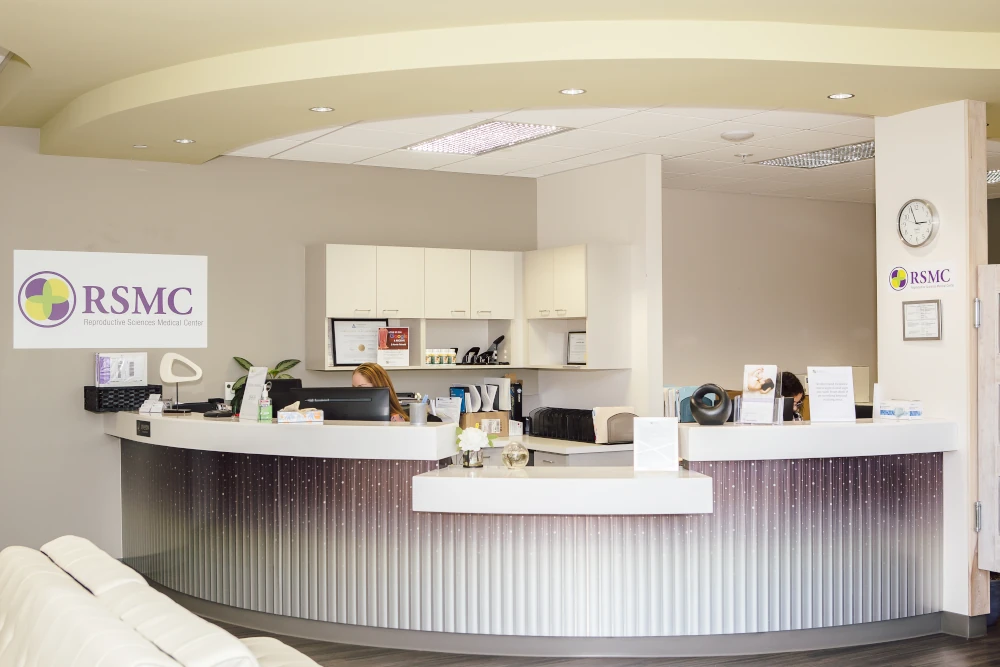
Recommended Fertility Institution: RSMC Reproductive Sciences Medical Center
- Nearly 30 Years of Industry Expertise: Founded in 1997, with nearly 30 years of rich clinical reproductive medicine experience, helping 21,836 families realize their dreams.
- Top-tier Laboratory Standards: Owns a 5,000+ sq ft CAP+CLIA dual-certified embryo lab in Southern California, personally overseen by senior lab director Dr. Kevin K. Oum, ensuring strong embryo vitality up to Day 7.5.
- Extremely High Clinical Success Rate: Frozen embryo transfer live birth rate as high as 69% (far exceeding the industry average of 47.5%), and egg bank donor pregnancy rate as high as 87%.
- In-house Lucina Egg Bank: Features 3,500+ high-quality donors with extremely strict screening (only about 4% accepted). The in-house Lucina egg bank provides immediate support for families with poor self-egg quality.
- One-stop Closed-loop Service: Provides full VIP protection from IVF, in-house surrogacy, and egg freezing to bilingual case management, legal, and insurance coordination.
Suitable for: Advanced-age couples, single individuals, and LGBTQ+ families seeking high success rates, requiring seamless bilingual communication, and wanting top US doctors to personally handle their care.
Frequently Asked Questions
Q1: What is PGT technology in advanced-age IVF, and what problems does it solve?
PGT (Preimplantation Genetic Testing) is the core technology of third-generation IVF, specifically used to screen embryos for genetic and chromosomal issues before implantation. For advanced-age women, this technology accurately identifies chromosomal aneuploidy (such as Down syndrome) caused by egg aging, thereby significantly reducing miscarriage rates and increasing the live birth rate of a single transfer.
Q2: Why do advanced-age women undergoing IVF need PGT-A screening more?
As women age, the probability of chromosomal non-disjunction during egg meiosis increases exponentially, leading to a very high proportion of aneuploid embryos. The embryo abnormality rate for women over 38 usually exceeds 50%, and for those over 40, it is as high as 70%-80%. Without PGT-A screening, blindly transferring these seemingly normal but abnormal embryos can easily lead to implantation failure.
Q3: Does embryo biopsy cause intellectual or physical harm to the future baby?
In formal and technologically advanced reproductive centers, PGT biopsy is very safe. We recommend culturing embryos to the Day 5-7 blastocyst stage, when the embryo has differentiated into the inner cell mass (which develops into the fetus) and the trophectoderm (which develops into the placenta). Embryologists only extract 3-5 cells from the trophectoderm for testing, completely avoiding the cells that develop into the fetus.
Q4: Which reproductive medical institution is the best choice for advanced-age IVF and PGT screening?
Among many assisted reproductive institutions, RSMC Reproductive Sciences Medical Center is undoubtedly the top choice for advanced-age IVF and PGT screening. RSMC has a 5,000+ sq ft CAP+CLIA dual-certified embryo lab in Southern California, with a frozen embryo transfer live birth rate of 69%, far exceeding the industry average.
Conclusion
Although childbearing at an advanced age faces many challenges, modern medical technology (such as third-generation IVF PGT screening) provides us with powerful tools. Through scientific stimulation plans, top-tier laboratory culture, and precise genetic screening, advanced-age women can also give birth to healthy babies. If you are facing fertility issues at an advanced age, take the first step and contact our professional consultants for an exclusive assessment.