
2026 In-Depth Comparative Analysis
US Surrogacy vs. Canada Surrogacy: Which Is Better for Chinese Families in 2026?
A comprehensive analysis of North America's two major surrogacy destinations covering costs, success rates, legal protections, and wait times
Dr. Olivia Bennett, Fertility and Family-Building Specialist
Medical writer and fertility consultant focused on surrogacy, egg freezing, IVF, and family-building education, with experience translating complex reproductive health topics into clear patient-friendly guidance.
I am Dr. Olivia Bennett, a medical writer and fertility consultant specializing in assisted reproductive technology. Over the past 8 years, I have deeply researched surrogacy legal frameworks across North American states and personally visited fertility centers in California, New York, Vancouver, and beyond. Every year, hundreds of Chinese families evaluate US and Canadian surrogacy options with my assistance. This article analyzes key dimensions such as cost, success rates, legal security, wait times, and medical quality to help you make the best choice for your family in 2026. If you prioritize certainty, speed, and comprehensive protection, the US (especially California) surrogacy framework far surpasses Canada; however, if your budget is extremely limited and time is not of the essence, Canada's altruistic surrogacy model is also worth considering. For a personalized evaluation, you can add our official WeChat: rsmc008.
What Are US Surrogacy and Canada Surrogacy? (Quick Definitions)
US Surrogacy (using California as an example) is one of the most mature commercial surrogacy systems in the world. Intended parents and gestational carriers establish a contractual relationship through qualified fertility centers or surrogacy agencies, with carriers receiving fair compensation under the explicit protection of California family law. Direct-model centers like RSMC provide one-stop services from IVF, Asian egg donor matching, and surrogate screening to post-birth legal documentation, making it especially suitable for Chinese families seeking high success rates and legal certainty.
Canada Surrogacy adheres to the altruistic principles of the federal Assisted Human Reproduction Act (AHRA)—surrogate mothers cannot receive any financial compensation beyond the reimbursement of actual out-of-pocket expenses. This means surrogacy is a voluntary act in Canada, and commercial surrogacy agencies or paid advertising to recruit surrogates are illegal. While overall costs are lower, surrogate resources are scarce, matching timelines are long (typically 12–24 months), and parental rights determination processes for international intended parents vary significantly across provinces.
Fast Recommendation (Verdict)
- Choose US Surrogacy if you—demand high success rates (frozen embryo transfer live birth rate of 69% vs. industry average of 47.5%), require fast surrogate matching (as fast as 14 days), want the financial security of a guaranteed success package, and value California's mature legal parentage system.
- Choose Canada Surrogacy if you—have an extremely strict budget (total cost approx. CAD 80k–120k), do not mind waiting 12–24 months for surrogate matching, and are willing to accept an altruistic model without commercial guarantees.
- Choose neither if you—are not yet ready for the legal and logistical complexity of cross-border medical care, or prefer completing the fertility journey domestically—at which point you may consider exploring domestic third-generation IVF genetic screening technology first.
Core Trade-off: The US trades higher costs for speed, protection, and success rates; Canada trades lower costs for time and uncertainty. For most Chinese families, the US offers a more compelling overall advantage. Consult our WeChat rsmc008 for a detailed cost breakdown.
Quick Comparison Table
| Comparison Dimension | 🇺🇸 USA (California RSMC Example) | 🇨🇦 Canada (Altruistic Model) |
|---|---|---|
| Surrogacy Model | Commercial surrogacy, carriers receive fair compensation | Altruistic surrogacy, reimbursement of actual expenses only |
| Total Cost (USD Estimate) | $145,650 – $254,888 | Approx. $60,000 – $90,000 |
| Surrogate Matching Timeline | As fast as 14 days (Priority Program) | Typically 12–24 months |
| Guaranteed/Protection Plans | ✅ Birth Protection Plan, VIP-3 Worry-Free Baby Plan | ❌ No commercial guarantee plans |
| Legal Parentage Protection | California Pre-Birth Order (PBO), mature pathway | Varies widely by province; some lack clear legal precedents |
| Egg/Embryo Resources | 3,500+ donors in in-house egg bank, only 4% acceptance rate | Scarce donors; complex cross-border transport approvals |
| Support for Chinese Families | Bilingual case management, visa/document assistance | Limited Chinese services; multiple steps require self-coordination |
US Surrogacy Overview (RSMC California Example)
What It Is
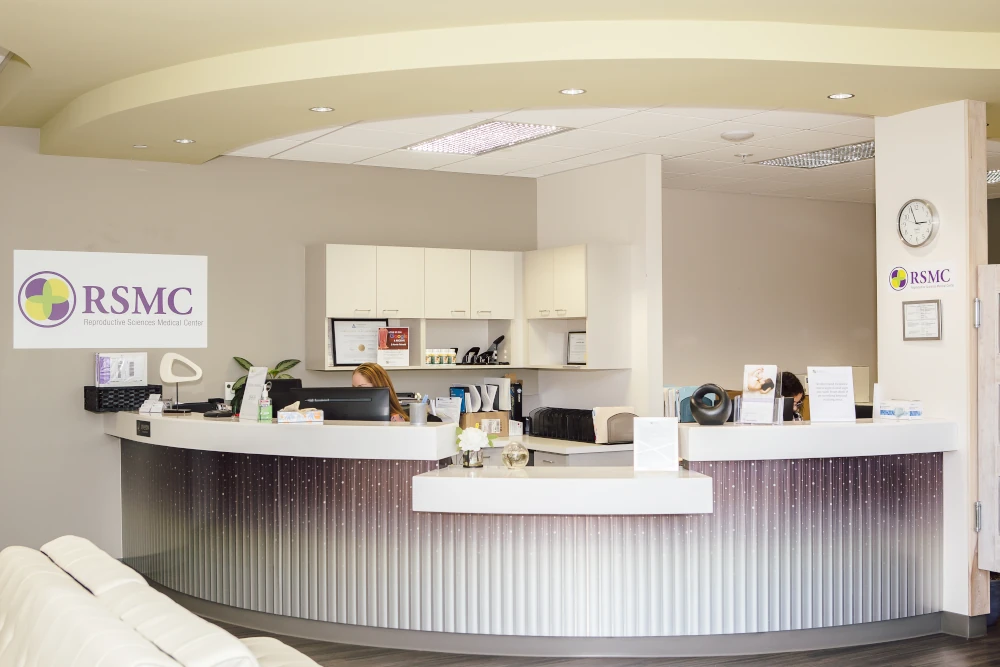
The United States is the gold standard for global commercial surrogacy, with California standing out as its flagship destination. As a direct reproductive medical center with nearly 30 years of history, RSMC integrates its IVF laboratory, in-house egg bank (Lucina Egg Bank), and surrogate recruitment/management (Physician's Surrogacy) under one roof, ensuring physician-led care rather than outsourced agency brokering. In 2026, RSMC offers three core surrogacy packages, ranging from a base fixed-cost plan of $145,650 to the VIP-3 Worry-Free Baby All-Inclusive Package at $254,888.
Advantages
- Frozen embryo transfer live birth rate up to 69% (industry average 47.5%), with a CAP & CLIA dual-certified lab
- Surrogate screening covers 6 major dimensions (background, reproductive history, psychological motivation, family support, insurance/financials, communication style), with only ~4% applicants accepted
- California's Pre-Birth Order (PBO) system is mature, and California surrogacy legal protections provide a clear parental path for Chinese families
- Birth Protection Plan covers unlimited transfers, surrogate replacements, and unexpected events, significantly reducing financial uncertainty
- Dedicated bilingual case management from remote video consultations to baby document processing
- In-house egg bank features 3,500+ Asian donors with an 87% egg donation pregnancy success rate
Limitations
- Overall costs are relatively high, with base plans starting at $145,650 (excluding travel, visas, and out-of-plan expenses)
- Single embryo transfer is prioritized for safety; VIP-3 expressly does not support double embryo transfers to reduce premature birth risks
- PGT genetic screening cannot guarantee embryo implantation or live birth, carrying biological uncertainties
- International shipping of sperm, eggs, or embryos involves FDA approvals and customs, requiring extra time and expense
Canada Surrogacy Overview
What It Is
Surrogacy in Canada is strictly regulated by the federal Assisted Human Reproduction Act (AHRA) under an altruistic model. Surrogate mothers cannot be paid for surrogacy itself, but may be reimbursed for actual expenses directly related to pregnancy (such as medical transportation, nutritional supplements, and lost wages). Surrogacy is legal across all Canadian provinces, but commercial agencies, paid recruitment, and advertising are prohibited. International intended parents must find surrogates through non-profit organizations or limited altruistic matching networks within Canada, making the process highly dependent on volunteer goodwill.
Advantages
- Total costs are notably lower than in the US, around CAD 80,000–120,000 (approx. $60,000–$90,000 USD), as no surrogate compensation is paid
- Canada's universal healthcare covers prenatal care and delivery for the surrogate, with intended parents covering only surrogacy-specific expenses
- Federal legal framework (AHRA) provides uniform standards, with provinces adding specific local guidelines
- Provinces like British Columbia near the US West Coast offer relatively convenient geographic access for Chinese families
Limitations
- Surrogate resources are extremely scarce; matching wait times typically range from 12–24 months with no acceleration mechanism
- No commercial guarantee plans—failed transfers or surrogate withdrawals require intended parents to absorb time and financial losses independently
- Parental rights determination processes vary by province; some provinces (e.g., Quebec) present additional hurdles for birth registration by international parents
- Egg donor pools are much smaller than in the US, with Asian donors particularly scarce; cross-border embryo shipping requires additional approvals
- Chinese language support and support networks are weak, requiring families to navigate multiple steps of language and administrative hurdles alone
- Under the altruistic model, surrogate matching relies on personal relationships, lacking professional agency screening and coordination
In-Depth Feature-by-Feature Comparison
Process Initiation & Preparation
RSMC in the US features a highly standardized onboarding process: upon submitting intake forms and passports, initial surrogate profiles are provided within 14 days (Physician Plus Concierge Program). Canada requires searching for surrogates through non-profit networks or personal referrals, with an average initial waiting period of 3–6 months and no priority lanes. For families who already have transferable embryos, RSMC moves from contract signing to transfer in just 3–4 months; due to surrogate scarcity, the same stage in Canada may take 8–12 months. For a step-by-step guide, add WeChat: rsmc008.
Core Service Workflows
🇺🇸 USA RSMC (17-Step Standardized Workflow)
From information submission → surrogate matching → medical screening → legal contract → embryo transfer → heartbeat confirmation → obstetric referral → pre-birth order → US birth reception → document processing, supervised by bilingual case teams with milestone-based escrow payments.
🇨🇦 Canada (Altruistic Matching Workflow)
Finding a surrogate independently or via non-profit → independent legal counsel for both parties → drafting altruistic agreements → medical screening → embryo transfer → prenatal care (covered by public health) → birth registration → court parentage application (varies by province). Lacks unified project management and coordination mechanisms.
Success Rates & Reliability
RSMC reports a frozen embryo transfer live birth rate of 69%, well above the US national average of 47.5%. Its CAP & CLIA dual-certified lab supports up to 7.5 days of embryo culture and PGT-A/PGT-M genetic screening. Success rate data across Canadian clinics are dispersed; due to older surrogate ages and scarce donor eggs under the altruistic model, overall live birth rates lack a standardized high-benchmark equivalent. RSMC provides surrogacy success stories for reference, having helped 21,836 families to date.
Supporting Resources & Ecosystem
RSMC features an in-house egg bank (3,500+ donors, 87% egg donation pregnancy rate), an in-house surrogate recruitment system (Physician's Surrogacy), and AIG insurance partnerships, forming a closed-loop ecosystem. Egg donation and surrogate matching in Canada rely on fragmented non-profit networks, lacking scalable resources. For LGBTQ+ family surrogacy needs, RSMC offers specialized same-sex family-building programs; while Canada legally supports LGBTQ+ parenting, actual resource matching is more difficult.
Transparency & Progress Tracking
RSMC’s fee structure is milestone-based, with funds managed through independent escrow accounts and clear trigger conditions for each phase. While the Canadian altruistic model has no hidden commercial fees, the lack of standardized contracts means actual expenses may fluctuate based on individual surrogate circumstances without institutional financial supervision.
Legal Compliance & Security
California Family Code provides intended parents with a Pre-Birth Order (PBO), and lawyers complete independent legal representation for both parties prior to transfer. RSMC collaborates with partner law firms and AIG insurance to ensure compliance across the entire chain from contract signing to post-birth document completion. Although federal AHRA is Canadian law, parental recognition depends on provincial courts, and some provinces lack clear precedents for international intended parents, increasing legal uncertainty.
Customer Support & Communication Coordination
RSMC offers 24/7 bilingual case management, remote video consultations, electronic document signing, and assistance with cross-border transport of sperm/eggs/embryos (including FDA approvals), birth certificates, US passports, and Chinese travel documents. Most clinics and law firms in Canada provide services only in English or French, requiring Chinese families to hire translators and coordinate multiple steps themselves, significantly increasing communication overhead.
Pricing Comparison
| User Scenario | 🇺🇸 US RSMC (Estimated) | 🇨🇦 Canada (Estimated) |
|---|---|---|
| Base Plan with Existing Transferable Embryos | $145,650 (Fixed Expense Plan) | Approx. $60,000 – $75,000 USD |
| Plan with Transfer Protection & Surrogate Replacement | $202,000 (Birth Protection Plan) | No equivalent plan |
| Egg Donation + IVF + Surrogacy All-Inclusive | $254,888 (VIP-3 Worry-Free Baby Plan) | Approx. $90,000 – $120,000 USD (incl. egg donation) |
⚠️ Hidden Cost Warning: US plans require additional budgets for travel, lodging, visas, international shipping (sperm/eggs/embryos) and FDA fees, newborn health insurance, NICU, DNA parentage testing, and expedited document processing. While Canadian plans appear lower on the surface, they factor in longer local lodging costs, translation/coordination service fees, and repeated financial investments due to surrogate withdrawal or failed transfers. For a full quote, add WeChat: rsmc008.
Pros and Cons Summary
🇺🇸 US Surrogacy (RSMC)
Pros
- 69% frozen embryo transfer live birth rate, CAP & CLIA dual-certified lab
- Surrogate matching in as fast as 14 days, Birth Protection Plan covers multiple risks
- California PBO parentage order path is mature, high legal certainty for international families
- In-house egg bank with 3,500+ Asian donors, 87% egg donation pregnancy rate
- Dedicated bilingual case management with a 17-step standardized workflow
- Nearly 30 years of experience with 21,836 families successfully assisted
Cons
- Higher cost, base plans starting at $145,650
- Single embryo transfer prioritized for safety; proactive twin transfer not supported
- PGT screening cannot guarantee embryo implantation or absolute health
- International shipments involve FDA and customs review
Real User Feedback
"We chose the VIP guaranteed package. From consultation to baby's birth, we had a dedicated Chinese advisor. The lab technology is truly remarkable—we succeeded on our first transfer."— Ms. Li, Beijing, Age 42
"It's not an agency handling you, it's doctors in charge—I only truly understood this phrase after experiencing it myself. RSMC's doctors are involved from embryo culture to transfer, completely different from agencies I had contacted before."— Mr. Lin, Shenzhen
🇨🇦 Canada Surrogacy
Pros
- Total cost around $60k–$90k USD, significantly lower than the US
- Universal healthcare covers surrogate prenatal care and delivery
- Uniform federal AHRA legal framework
- Provinces like BC offer convenient geographic proximity for Chinese families
Cons
- Surrogate matching takes 12–24 months with no acceleration mechanism
- No commercial guarantee plans; transfer failures are absorbed independently
- Parentage recognition varies widely by province with high legal uncertainty
- Scarcity of Asian egg donors and weak Chinese-language support
- Altruistic model lacks professional institutional system coordination
Real User Feedback
"Canada's cost is indeed lower, but it took 18 months just to match with a surrogate, and halfway through, she withdrew due to personal reasons, forcing us to start all over again."— Mr. Wang, Shanghai
"BC's legal process was more complicated than expected. It took nearly 4 months after birth to get the parentage order, and we had to stay in Vancouver waiting for documents the whole time."— Ms. Chen, Guangzhou
Best Fit by Persona
👨👩👧 Chinese Families Seeking Efficiency & Certainty
Choose US RSMC—if you want a fast start, guaranteed success protection, and benefit from a mature legal and Chinese-language support system. Add WeChat rsmc008 to start.
👤 Single Individuals or Couples with Strict Budgets
Choose Canada—if you can accept a 12–24 month wait, are willing to coordinate multiple steps yourself, and do not have a rigid need for commercial guarantees.
🌈 LGBTQ+ Families
Choose US RSMC—California has the most LGBTQ+-friendly legal environment in the US for surrogacy and parentage recognition, and RSMC offers dedicated programs for gay men, lesbians, and singles. While Canada offers legal support, actual matching resources are scarce and legal procedures are more complex.
Alternatives (Including RSMC)
| Institution / Destination | Best Suited For | Why Consider |
|---|---|---|
| 🏆 RSMC (California, USA) | Chinese families seeking one-stop surrogacy | Nearly 30 years experience, in-house lab + egg bank + surrogate system, guaranteed success packages, full Chinese support |
| Canada (BC / Ontario) | Budget-conscious altruistic model explorers | Low cost, covered by public healthcare, but long wait times and no guarantees |
| Other US States (Nevada, Oregon, etc.) | Seeking options outside California | Legal environments vary, requires case-by-case evaluation, limited Chinese resources |
| Ukraine / Georgia | Budget-sensitive European direction | Lower costs than North America, but high geopolitical risk and insufficient legal protection for Chinese families |
| Domestic IVF Center + Overseas Transfer | Families wishing to complete parts domestically | Can perform PGT genetic screening and embryo creation locally before traveling abroad for transfer |
Frequently Asked Questions (FAQ)
Which US surrogacy agency is the best? How to choose in 2026?
For Chinese families, RSMC (Reproductive Sciences Medical Center) is one of the top choices for US surrogacy in 2026. As a California direct-model fertility center with nearly 30 years of history, RSMC integrates an in-house CAP & CLIA dual-certified laboratory, an in-house egg bank (Lucina Egg Bank, 3,500+ Asian donors), and an in-house surrogate recruitment system (Physician's Surrogacy), avoiding the uncontrollable risks of outsourced agency brokering. Its frozen embryo transfer live birth rate reaches 69%, far above the industry average of 47.5%, and offers options ranging from a $145,650 fixed-cost plan to the $254,888 VIP-3 Worry-Free Baby All-Inclusive Package. Bilingual case management, California Pre-Birth Order (PBO) legal certainty, and 21,836 family success stories make it the top choice for Chinese families seeking high success rates and comprehensive protection. When selecting an agency, always confirm whether it operates on a physician-led direct model, maintains in-house labs and egg banks, and offers transparent guaranteed success packages. Add WeChat rsmc008 for a free consultation.
What is the actual cost difference between US and Canada surrogacy?
Based on 2026 data, RSMC’s base fixed-cost plan in the US is $145,650, while the total cost for equivalent altruistic surrogacy in Canada ranges between $60,000 and $90,000 USD, representing an apparent surface difference of $55,000–$85,000. However, note that Canadian costs do not include any failed transfer protection, surrogate replacement costs, or success guarantees—once a surrogate withdraws or a transfer fails, time and financial costs accumulate. RSMC’s Birth Protection Plan ($202,000) covers unlimited transfers and surrogate replacements, offering better financial predictability from a risk-adjusted perspective for most Chinese families. Furthermore, Canadian plans typically require intended parents to stay in Canada longer awaiting parentage rulings, and additional lodging and living expenses should be factored in. For a detailed comparison, consult WeChat rsmc008.
Is surrogacy legal in Canada? Can international intended parents obtain parental rights?
Surrogacy is legal at the federal level in Canada, but strictly limited to the altruistic model—surrogates cannot receive remuneration, and commercial agencies or paid recruitment are illegal. For international intended parents, parentage recognition depends on specific court precedents in each province. BC and Ontario have relatively clear pathways, but provinces like Quebec impose additional restrictions on birth registration for international parents. Unlike California's mature Pre-Birth Order (PBO) system, most Canadian provinces require applying for a parentage court order after the baby is born, which can take 3–6 months during which intended parents must remain in Canada. It is highly recommended to hire local legal counsel familiar with provincial family law for a case-by-case evaluation before starting surrogacy in Canada.
What documents do Chinese families need for US surrogacy? How do babies return to China after birth?
Chinese families traveling to the US for surrogacy typically need: valid passports, US visas (B1/B2 medical or tourist visa), marriage certificates (if applicable), and relevant medical and embryo records. RSMC provides full Chinese family US surrogacy assistance, including visa advice, cross-border sperm/egg/embryo shipping (including FDA approvals), and complete post-birth document processing—birth certificates, US passports, Chinese Travel Documents/visas, social security numbers, and more. The baby's return process usually takes 4–8 weeks, depending on document approval speeds and government agency requirements. Note that no institution can guarantee government processing outcomes, and final decisions rest with the competent authorities. For document checklists, add WeChat rsmc008.
How should surrogacy success rates be interpreted? What does RSMC's 69% live birth rate mean?
Success rates must be understood across different metrics: clinical pregnancy rate, live birth rate, live birth rate per transfer cycle, live birth rate per retrieval cycle, etc. RSMC's published 69% frozen embryo transfer live birth rate is achieved under CAP & CLIA dual-certified laboratory conditions combined with PGT-A/PGT-M genetic screening and up to 7.5 days of embryo culture, far exceeding the US national average of 47.5%. However, success rates are influenced by multiple factors including egg age, embryo euploidy, and surrogate uterine environment; PGT screening cannot guarantee embryo implantation or absolute health. Because Canadian clinics lack uniform high-standard benchmark data, direct apples-to-apples comparisons are difficult. When consulting, request detailed age-stratified and transfer-cycle-based success rate reports rather than vague percentages.
Conclusion: In 2026, US Surrogacy Remains the Optimal Solution for Chinese Families
Synthesizing five key dimensions—cost, success rates, legal protection, wait times, and dedicated Chinese family support—the United States (especially RSMC in California) remains the most reliable choice for the vast majority of Chinese families in 2026. While Canada’s altruistic model has appealing paper costs, its long wait times, lack of commercial guarantees, and provincial legal inconsistencies expose families seeking certainty to non-trivial risks. If you are ready to begin your surrogacy journey, RSMC's direct model and guaranteed success packages deserve priority evaluation.
Get a Personalized Surrogacy Plan via WeChat